Introduction
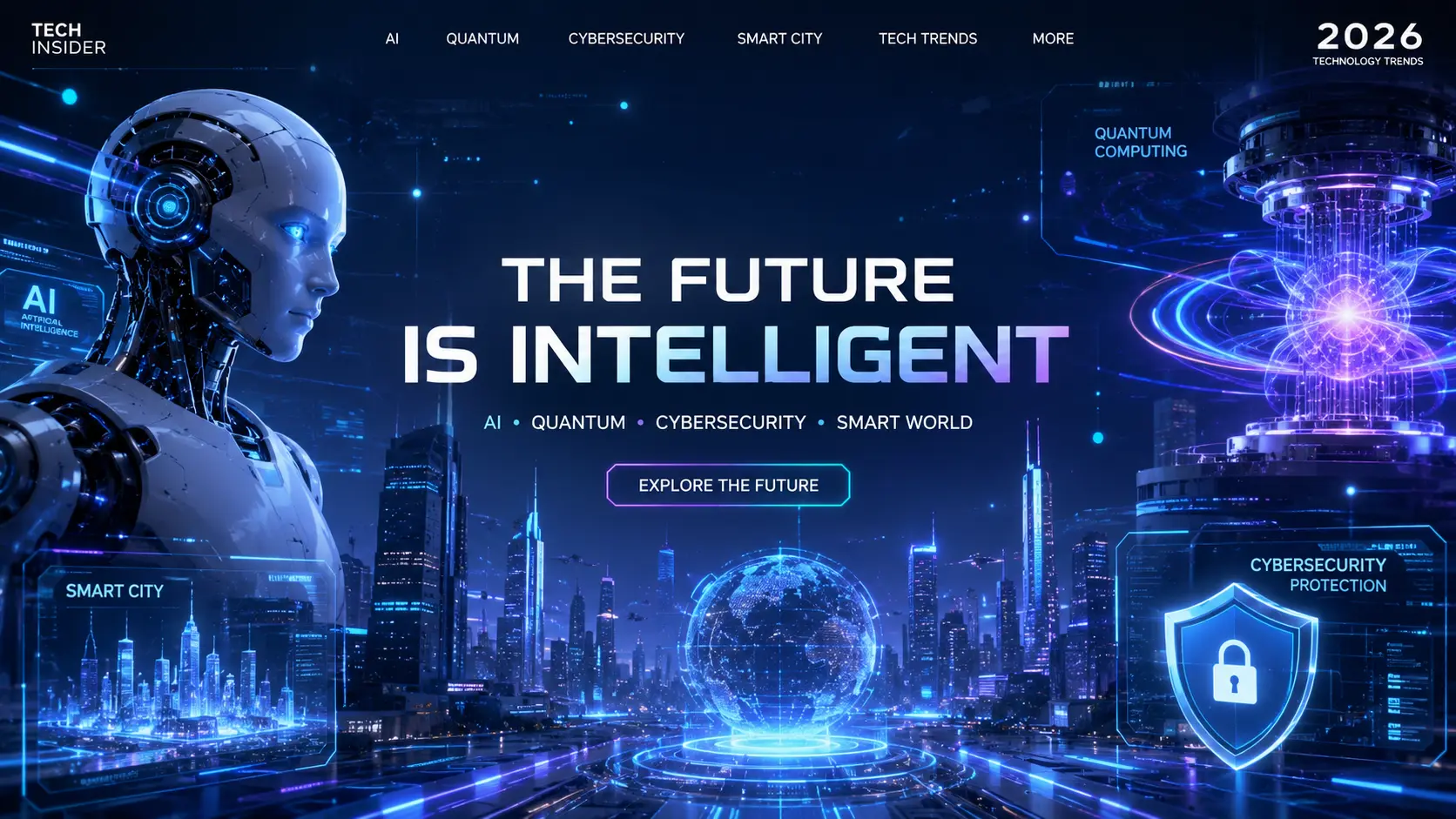
Technology in 2026 is evolving faster than ever before. Artificial intelligence is becoming smarter, quantum computing is moving closer to real-world applications, and robotics is entering daily life. Businesses are investing heavily in automation, cybersecurity, and edge computing to stay competitive in a digital-first world.
In this article, we explore the top technology trends defining 2026 and how these innovations will impact businesses, jobs, healthcare, education, and everyday life.
1. Agentic AI and Autonomous AI Systems
One of the biggest breakthroughs in 2026 is the rise of Agentic AI — AI systems capable of making decisions, planning tasks, and executing workflows with minimal human input.
Unlike traditional chatbots, AI agents can:
- Schedule meetings
- Write software code
- Analyze business data
- Automate customer service
- Manage digital operations
Major tech companies are integrating AI agents into enterprise platforms to improve productivity and reduce operational costs.
Why It Matters
- Faster workflows
- Lower labor costs
- Improved customer experiences
- Better decision-making
2. Quantum Computing Goes Mainstream
Quantum computing is no longer just experimental technology. In 2026, governments and private companies are investing billions into quantum infrastructure and research.
Quantum computers can solve extremely complex problems much faster than traditional computers, especially in:
- Drug discovery
- Climate modeling
- Financial simulations
- Cybersecurity
- Logistics optimization
Real-World Impact
Quantum technology is expected to revolutionize industries that require massive computational power.
3. Physical AI and Smart Robotics
Robots powered by AI are becoming smarter and more adaptive. Physical AI allows robots to learn from environments and improve through experience.
In 2026, AI-driven robots are being used in:
- Manufacturing
- Warehousing
- Healthcare
- Agriculture
- Home automation
Emerging Robotics Trends
- Self-learning robots
- AI-powered warehouses
- Autonomous delivery systems
- Human-assist robots in healthcare
4. Edge AI and Real-Time Computing
Edge AI is transforming how devices process information. Instead of sending data to cloud servers, devices now process data locally for faster performance and better privacy.
Industries benefiting from edge computing include:
- Smart cities
- Autonomous vehicles
- IoT systems
- Industrial automation
- Healthcare monitoring
Benefits of Edge AI
- Faster response times
- Improved security
- Lower bandwidth costs
- Real-time analytics
5. Cybersecurity and Zero Trust Architecture
As cyber threats grow more advanced, organizations are adopting Zero Trust Security models.
Zero Trust means:
“Never trust, always verify.”
This approach requires continuous authentication and strict access control across systems.
Key Cybersecurity Trends in 2026
- AI-powered threat detection
- Quantum-safe encryption
- Biometric authentication
- Decentralized identity systems
- Cloud security automation
6. AI-Powered Software Development
AI coding assistants are changing how software is built. Developers now use AI tools to:
- Generate code
- Detect bugs
- Write documentation
- Automate testing
- Improve software quality
Advantages
- Faster development cycles
- Reduced engineering costs
- Improved developer productivity
- Better code quality
7. Digital Twins and Smart Manufacturing
Digital Twin technology creates virtual replicas of physical systems, factories, or products.
Manufacturers use digital twins for:
- Predictive maintenance
- Real-time monitoring
- Production optimization
- Quality control
8. Immersive Technologies (AR & VR)
Augmented Reality (AR) and Virtual Reality (VR) continue to grow in:
- Gaming
- Education
- Healthcare
- Retail
- Remote collaboration
Future Possibilities
- Virtual workplaces
- AR shopping experiences
- Medical simulation training
- Interactive learning environments
9. Sustainable and Green Technology
Sustainability is becoming a core focus for the tech industry.
Companies are investing in:
- Energy-efficient AI
- Green data centers
- Smart energy grids
- Carbon tracking software
- Sustainable hardware manufacturing
10. AI + Human Collaboration
Rather than replacing humans entirely, the future of technology focuses on AI-human collaboration.
AI tools are helping professionals:
- Analyze data faster
- Improve creativity
- Automate repetitive tasks
- Enhance decision-making
The most successful businesses in 2026 are combining human expertise with AI-powered intelligence.
Final Thoughts
The technology landscape in 2026 is defined by intelligent automation, quantum breakthroughs, robotics, edge computing, and advanced cybersecurity.
Organizations that adapt early to these emerging technologies will gain a major competitive advantage in the years ahead.
Whether you are a business owner, developer, student, or tech enthusiast, understanding these